You are choosing a finish for kitchen cabinets, wardrobe doors, or interior wall panels. You like the warm look of oak, but you also know that solid oak veneer is expensive, heavy to handle, and sensitive to moisture and warping. That is exactly where oak design decorative film enters the conversation. It gives you the visual character of oak at a fraction of the cost, and it does not require the same level of maintenance. The key question is not whether it can replace real wood. The key question is which oak film specification will survive the way you plan to use it, and how to avoid a batch that disappoints you after installation.
Content
Oak design decorative film is a printed PVC membrane that reproduces the grain, tone, and texture of oak wood. It is not a veneer cut from a tree; it is a manufactured surface material that is bonded onto a substrate such as MDF, particleboard, gypsum board, or metal. The film is produced in large rolls, printed with an oak pattern, and often embossed to simulate the depth of wood pores. This embossing is what separates a convincing oak film from a flat, plastic-looking print.
Changzhou Yunchang Decorative Materials Co., Ltd. produces this kind of film as part of its wood grain decorative film line. The company offers oak design, hickory design, pine design, and walnut design within that line, and the full catalogue covers more than a thousand patterns across wood, stone, and carpet textures. When you order oak design decorative film, you are actually specifying a printed product with defined physical properties, not just a colour sample.
Before you commit to a supplier, judge the film against three practical criteria: the substrate you are covering, the forming process you will use, and the environment the finished surface will live in. A film that looks perfect on a flat cabinet door may fail when wrapped around a curved edge. A film that handles fine on a vertical wall may wear out quickly on a tabletop. These are not abstract concerns; they are the most common reasons why a decorative film project goes wrong.
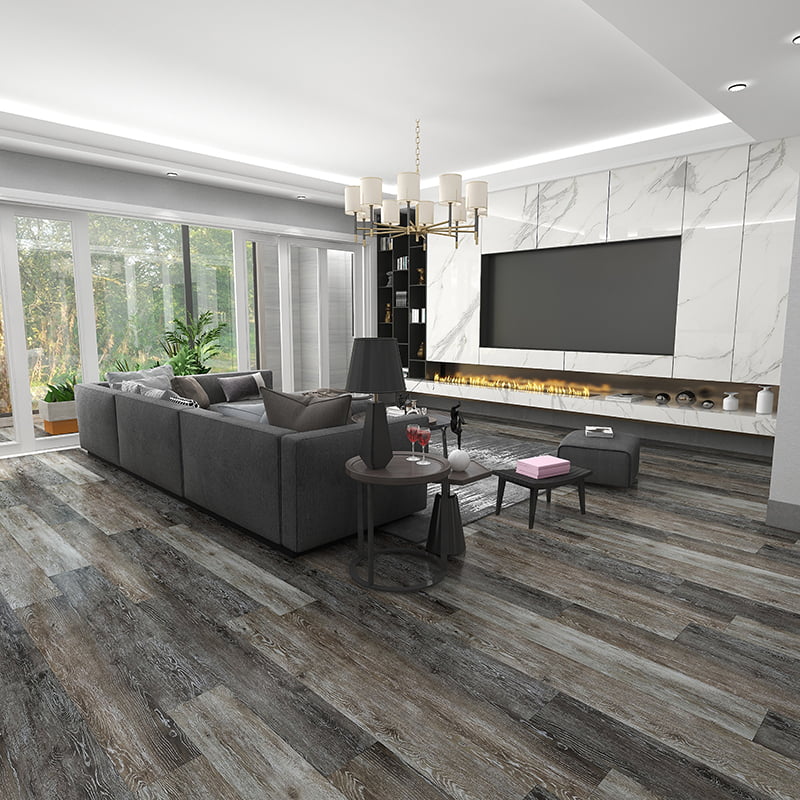 Oak Grain PVC Decorative Film for Furniture and Interior SurfacesThis oak-patterned film offers clear, balanced grain lines that enhance cabinetry and wall panels. Available in multiple widths, it suits flat lamination and profile wrapping, making it a versatile choice for matching your substrate and forming process.View Product →
PVC decorative films commonly range from 0.12 mm to 0.50 mm in thickness. Thin films, around 0.12 mm to 0.20 mm, are easier to laminate onto flat surfaces and are usually applied with a cold roller or a membrane press. Thicker films, from 0.30 mm to 0.50 mm, are more resilient and are better suited for profile wrapping, where a film must bend around corners and grooves without tearing or losing the embossed texture. The roll width also matters. A wider roll allows larger panels to be covered with fewer seams, but it can increase waste if your panel sizes are small. Ask your supplier for the exact roll width and thickness range before you design your cutting plan.
Some oak design decorative films come with an adhesive backing, while others are designed to be applied with a separate glue or a hot-melt lamination process. If you are doing manual application, a self-adhesive film is easier to work with, but it tends to cost more per square metre. If you are running a production line, a non-adhesive film gives you more control over the bond strength and allows you to choose an adhesive that matches your substrate. A common mistake is to buy an adhesive film for a substrate that needs a stronger bond. Always test the adhesion on the exact substrate you plan to use.
| Parameter | Typical Range | Why It Matters |
|---|---|---|
| Thickness | 0.12–0.50 mm | Determines flexibility, edge coverage, and abrasion resistance. |
| Roll width | 1260–1420 mm | Affects yield, seam visibility, and cutting waste. |
| Adhesive type | Self-adhesive or non-adhesive | Controls installation method and required equipment. |
| Surface treatment | Matt, semi-gloss, embossed | Defines the light reflection and touch feel of the oak pattern. |
| Dimensional stability | Low shrinkage after lamination | Prevents warping and delamination over time. |
The most common applications for oak design decorative film fall into three categories. First, furniture surfaces: wardrobe doors, kitchen cabinet fronts, bedside tables, and shelving units. These surfaces are vertical or lightly used, and the film gives a realistic wood look without the weight and cost of solid oak. Second, interior doors and door frames: oak film wraps around the profile cleanly, so doors match the surrounding furniture without a full wood finish. Third, wall panels and commercial interiors: offices, hospitality spaces, and showrooms use oak film to create a warm, natural ambience while keeping maintenance simple.
In high-traffic or horizontal areas, oak film still works, but you need to choose a thicker film and add a protective topcoat or a wear layer. A kitchen tabletop is a different situation from a wardrobe door. If the surface will be wiped down frequently or exposed to hot cups, you should ask the supplier about scratch resistance and heat tolerance before ordering. The visual quality of the oak pattern is only part of the story; the film has to survive the daily abuse it receives.
Purchase decisions for decorative film are rarely simple colour choices. The real risks are hidden in batch consistency, environmental durability, and long-term adhesion. If you order 2,000 square metres and the second batch comes out with a different tone, you will have a serious installation problem. Ask your manufacturer how they control batch-to-batch colour variation and whether they keep reference samples for every production run.
Another point to investigate is heat and humidity performance. Oak design decorative film that is installed near a window or in a bathroom may experience temperature swings and moisture. The film needs to bond firmly without bubbling or lifting. A responsible supplier will be able to tell you the recommended temperature range for application and the limits of the product after bonding. In this context, working with a company that has both manufacturing experience and a structured quality management system makes a measurable difference. Changzhou Yunchang states that it operates a complete and scientific quality management system, and it also supports custom development of new patterns as special editions. Those are useful factors to discuss when you request samples and set expectations for a production run.
Even a high-quality film will fail if the substrate and the application process are not prepared correctly. Here is the sequence that gives the best result:
If you are unsure about your own equipment or workforce, ask the manufacturer whether their film is designed for flat lamination, profile wrapping, or both. Choosing the wrong film type can turn a simple installation into a costly rework job.
When you have a clear picture of your substrate, your forming process, and the usage environment, oak design decorative film becomes a predictable, cost-effective solution. It gives you the oak aesthetic you want, while keeping material costs and installation time under control. The key is to verify the film specification against your actual workflow and to order from a manufacturer that can guarantee consistent quality across batches. To learn more about how oak films are used in real renovation and furniture projects, this practical guide on oak design decorative film covers additional styling and application details. If you are ready to specify a film for your project, start by requesting a sample and confirming the thickness, adhesion, and durability parameters that matter to you.



Contact
 China Company Address: No.5 Zhaojia Road,
Vietnam Factory Address: GNP Yen Binh
1 - lndustrial Center (Lot CN13,CN18,Yen
Binh Industrial Park, Ward, Dng Tien, Ph8 Yen,
Thai Nguyen 24000)
Thailand Factory Address: 289/12 Moo 7, Klong Kiu Sub-District, Ban Bueng District, Chonburi 20220 THAILAND
China Company Address: No.5 Zhaojia Road,
Vietnam Factory Address: GNP Yen Binh
1 - lndustrial Center (Lot CN13,CN18,Yen
Binh Industrial Park, Ward, Dng Tien, Ph8 Yen,
Thai Nguyen 24000)
Thailand Factory Address: 289/12 Moo 7, Klong Kiu Sub-District, Ban Bueng District, Chonburi 20220 THAILAND
 Tel: +86-13685281168
+86-13813687178
Tel: +86-13685281168
+86-13813687178
 E-mail: [email protected]




 English
 русский