You have a kitchen cabinet project that calls for the warm tones and bold grain of hickory, but the solid wood quotes keep pushing the budget. A hickory design decorative film can deliver the same look without the cost and long lead time. The practical answer is a printed PVC film that reproduces the hickory pattern, so you get the style, the versatility, and a consistent finish across every panel.
When you compare decorative film to real hickory, the first thing you notice is the price. Second is the maintenance. Solid hickory shifts with humidity, develops checks, and needs periodic oiling. A quality decorative film is dimensionally stable, easy to clean, and does not require special coatings. For furniture, doors, and interior wall cladding, the film is a realistic alternative.
Content
Hickory design decorative film is a PVC-based surface material printed with a high-resolution image of hickory wood grain. The printed pattern sits on a flexible vinyl base, and the top layer is usually protected by a clear transparent coating or a UV-resistant lacquer. This structure lets the film mimic natural hickory while providing the durability and ease of use that wood veneers often lack.
In a typical product lineup, wood grain decorative film includes several species such as oak, pine, walnut, and hickory. Each design has its own grain direction, contrast, and color depth. Hickory is characterized by its warm brown color, pronounced grain lines, and occasional small pores, which gives it a sturdy, rustic appearance. A dedicated hickory design from the wood grain series keeps that character consistent from roll to roll.
Because the film is used with MDF, plywood, metal, or even extruded PVC, it is a common choice for cabinet fronts, shelving, desk surfaces, and interior doors. It can be applied with flat lamination or wrapped around profiles with a heat gun and pressure roller. The flexibility of the substrate is what makes the film suitable for wrap-around edges and raised panels.
Hickory has a visual identity that sits somewhere between oak and walnut. It offers the strength of oak and the richness of walnut, with a distinctive irregular cathedral pattern. In many design projects, that character is exactly what you need to soften a modern kitchen or give a reception desk a more organic presence.
For instance, a small office renovation used hickory decorative film on the front of a reception desk, the wall behind it, and the shelf edges. The result looked like a custom wood feature but was installed in two days by a two-person team. The film also minimized the variation between panels, which is a common headache with solid wood.
The trend is not limited to offices. Hickory film works on wardrobe doors, media consoles, bathroom vanities, and even kickboards in retail spaces. It pairs well with black metal accents, concrete floors, and neutral upholstery. The key is to pick a film with a matte or low-gloss finish, because a glossy surface can make the grain look artificial.
Not all decorative films are equal. A low-cost roll may look good in the sample but fail after a few months of use. The most common problems are edge lifting, delamination, and rapid color change when exposed to sunlight. To avoid these risks, check the following parameters before you buy.
| Parameter | What to look for | Risk if ignored |
|---|---|---|
| Film thickness | 0.12 mm or more for flat surfaces; 0.18 to 0.20 mm for edge wrapping | Thin film wrinkles, shows substrate textures, and lifts on corners |
| Adhesive type | Pressure-sensitive adhesive with high initial tack | Bubbles, progressive peeling, and difficult rework |
| Abrasion resistance | At least 100 cycles in a Taber abrader for horizontal surfaces | Worn paths appear quickly on tabletops and drawer fronts |
| Color fastness | Rating 4 to 5 on the blue wool scale for interior use | Fading, yellowing, and uneven color after one year |
| Flammability | B1 or equivalent rating depending on local building codes | Fails fire safety inspections in commercial spaces |
The film thickness is one of the easiest specifications to overlook. For a membrane press or flat lamination, a film around 0.15 mm is safe. But if you plan to wrap the film around an angled edge, choose a slightly thicker product and verify with the supplier that the adhesive is designed for profiling. A thicker film also reduces the risk of telegraphing, where the texture of the underlying board shows through the face.
Abrasion resistance matters more on horizontal surfaces. A kitchen countertop or desk will see keys, dishes, and cleaning cloths daily. A film with low abrasion resistance loses its top layer and turns chalky. Look for a film that carries a manufacturer's performance data sheet. If the supplier cannot provide one, that is a warning sign.
Color fastness is important for surfaces near windows. Even indirect sunlight breaks down poor-quality inks. A rating of 4 or higher on the blue wool scale means the film can retain its color for years without a noticeable shift. For a broader overview of where hickory film is appropriate and the available types, read a practical guide to hickory decorative film.
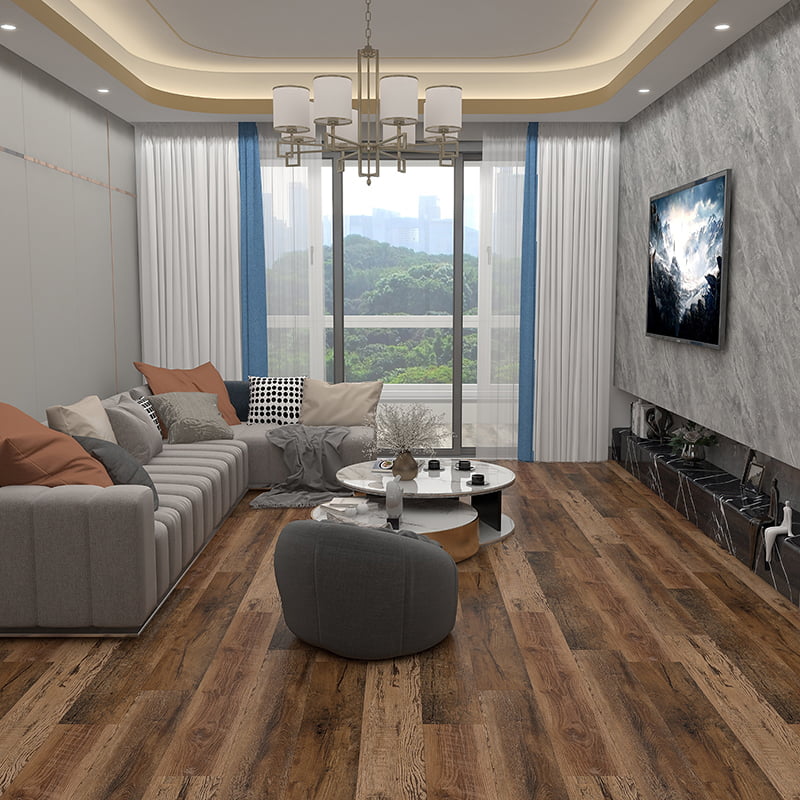
Installation quality is another deciding factor. The film will only look as good as the surface preparation. For most applications, start with a clean, dry, and dust-free substrate. Any grease or loose filler will cause air pockets. For porous materials such as MDF, apply a primer and let it dry completely before lamination.
Keep the room temperature between 18 and 25 degrees Celsius and the relative humidity below 70 during application. Cold film becomes stiff and brittle, while hot and humid conditions can cause condensation on the adhesive. Use a hard squeegee to press the film from the center outward. When wrapping edges, heat the film slightly with a heat gun, but avoid overheating because this may damage the printed layer.
Maintenance is straightforward. Wipe the film with a soft cloth and a mild soap solution. Do not use solvent-based cleaners, abrasive sponges, or steam cleaners. For a proper finish, dry the surface after each wipe to prevent lingering moisture around edges.
If you are specifying hickory design decorative film for a project, always ask for a rolled sample first. Check the grain pattern against your lighting, and test the film on the actual substrate you plan to use. Confirm the thickness, adhesive performance, and whether the adhesive is suitable for your application method.
A reliable manufacturer with a complete quality system and a track record of cooperative development is more valuable than a low price. Companies that can build custom designs and produce consistent batches will help you avoid surprises in large orders. You can learn more about the manufacturer’s production and testing setup by visiting the company's about page. With the right film and proper installation, hickory decorative film gives you the natural warmth of wood at a fraction of the cost and none of the routine upkeep.



Contact
 China Company Address: No.5 Zhaojia Road,
Vietnam Factory Address: GNP Yen Binh
1 - lndustrial Center (Lot CN13,CN18,Yen
Binh Industrial Park, Ward, Dng Tien, Ph8 Yen,
Thai Nguyen 24000)
Thailand Factory Address: 289/12 Moo 7, Klong Kiu Sub-District, Ban Bueng District, Chonburi 20220 THAILAND
China Company Address: No.5 Zhaojia Road,
Vietnam Factory Address: GNP Yen Binh
1 - lndustrial Center (Lot CN13,CN18,Yen
Binh Industrial Park, Ward, Dng Tien, Ph8 Yen,
Thai Nguyen 24000)
Thailand Factory Address: 289/12 Moo 7, Klong Kiu Sub-District, Ban Bueng District, Chonburi 20220 THAILAND
 Tel: +86-13685281168
+86-13813687178
Tel: +86-13685281168
+86-13813687178
 E-mail: [email protected]




 English
 русский