A workshop receives a bundle of pine veneer for twelve wardrobe doors and finds that the color shifts noticeably between the top and bottom sheets. Some doors match; others do not. This is typical with natural pine, a material that varies in tone, grain, and moisture response from tree to tree and even within a single trunk.
Pine design decorative film solves this specific headache. It is a PVC surface material printed with a pine grain pattern and produced in long rolls under controlled conditions. Every running meter of film shares the same grain structure and tonal depth, so a panel produced on Monday matches a panel produced on Friday. For furniture workshops, kitchen manufacturers, and interior fit-out contractors, that consistency is often worth more than the authenticity of a fickle natural material.
Content
Pine design decorative film is a PVC-based decorative film printed with a pine wood image and embossed with a matching tactile texture. The pattern reproduces the pale golden tone, pronounced knots, and open grain that make pine visually recognizable, but with a controlled repeat. Because the design restarts at regular intervals, a long production run stays visually uniform across thousands of panels.
In production, the printed image is transferred onto the base PVC film and then embossed so that the surface texture follows the printed grain. This makes the product feel different from a flat printed laminate. Once applied, the film becomes the outermost layer of the finished part, so it must deliver both the visual pattern and the tactile quality that support the illusion of real pine.
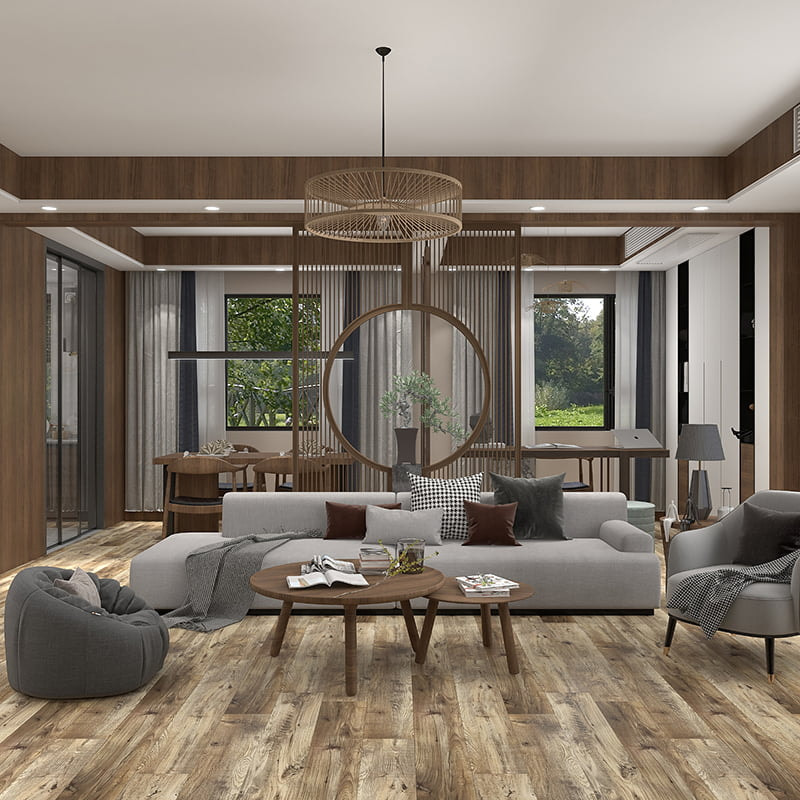 Pine Pattern PVC Decorative Film for Interior SurfacesThis pine-design film combines printed grain with embossed texture to mimic real softwood. It suits cabinets, doors, and wall panels where a light, natural wood look is desired.View Product →
Within the wood grain family, pine design film sits alongside oak, hickory, and walnut as one of the standard surface options offered by decorative film manufacturers.
Choosing between solid pine, natural pine veneer, and pine design decorative film is not about which material is better in isolation. It is about which one fits your production process and warranty obligations. The table below summarizes the practical differences.
| Criterion | Solid Pine | Natural Pine Veneer | Pine Design Decorative Film |
|---|---|---|---|
| Cost per finished surface | Highest | Moderate | Lowest |
| Grain consistency | Varies per board | Varies per sheet | Controlled repeat |
| Dimensional stability | Responds to humidity | Needs careful adhesion | Stable PVC carrier |
| Installation method | Carpentry | Gluing and pressing | Lamination or wrapping |
| Finish consistency | Hard to guarantee | Hard to guarantee | Factory controlled |
| Typical lead time | Depends on lumber | Depends on veneer | Standard roll orders |
The cost difference is usually the first reason a buyer switches. Pine design decorative film costs a fraction of solid pine per finished surface area, and because it comes in rolls, off-cuts are minimal. Natural pine veneer offers similar material savings, but still needs skilled splicing and pressing. The film can be applied by flat lamination to panels or profile wrapping to edges, so a cabinet door can be covered in a single operation.
Moisture behavior is also different. Natural pine continuously exchanges moisture with the air, which can lead to cupping, cracked finishes at joints, and seasonal movement. PVC film is essentially non-porous, so once applied it acts as a barrier. The appearance of the finished part stays stable for a given environment, which simplifies both production and warranty claims.
Warranty situations become clearer as well. With natural wood, color variability is accepted as an inherent characteristic, which leaves room for disputes. With film, you can reference the factory production specification and use the batch number on the roll label to confirm exactly what was supplied.
Pine is traditionally associated with light, warm interiors, so the film fits residential and light commercial projects where buyers want a natural wood feel without paying for solid timber. The following uses are the most common.
The film also works well in rental properties and hotel rooms, where replacing a damaged door or cabinet front is cheaper when the surface is a roll material instead of a solid wood component.
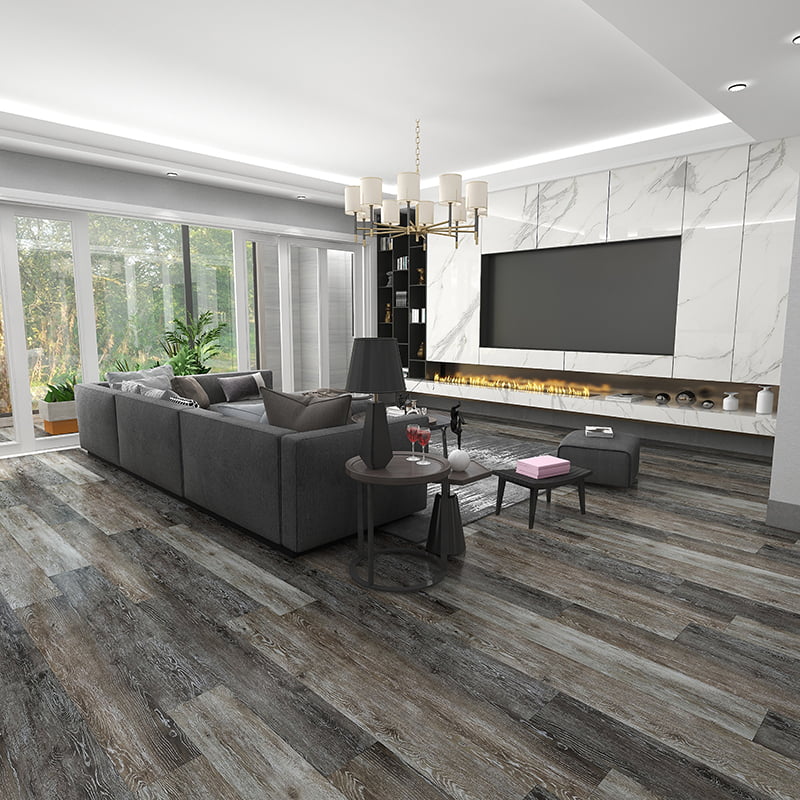 Wood Grain PVC Decorative Film Range for Indoor UseThis supplier offers PVC wood-grain films in oak, walnut, maple, pine, and more, with moisture-proof and easy-clean properties. Ideal for rental properties and budget-friendly surface renewal.View Product →
Pine design decorative film does have limits. It is not meant for exterior surfaces or locations exposed to long hours of direct sunlight, because PVC can fade under strong UV. In humid rooms such as bathrooms, the film itself can tolerate moisture, but the substrate edges must be sealed to prevent water from getting underneath the film. For more detail on pine-specific applications and material behavior, see this guide to pine decorative film uses.
Not all pine design decorative films perform the same. Comparing only price per roll can lead to films that delaminate, fade, or show an embossed texture that does not align with the printed grain. The following checklist covers the parameters that matter in daily production.
Test the film on your own substrate before committing to a full order. A sample swatch in the mail is useful, but it does not tell you how the film behaves on your edge-folding machine or under your workshop lighting. Apply it to the actual board, run it through your lamination line at production speed, and then inspect it for adhesion, color, and emboss depth.
Pine design decorative film is a roll-good industrial material, so the supplier relationship determines how smooth your repeat orders will be. A manufacturer who keeps stable color across production runs, maintains the embossing cylinders, and supplies accurate batch documentation is more valuable than one who only offers a low price.
Changzhou Yunchang Decorative Materials Co., Ltd. is a decorative film manufacturer whose about page describes a complete quality management system and production experience in PVC decor films. The company offers wood grain, stone grain, and carpet grain series combined with more than a thousand colorways, and it started mass production at a Vietnamese factory in September 2023. That gives customers an additional supply location and shortens delivery for some export markets.
Custom development is also worth discussing. If your client wants a particular pine tone or a unique knot pattern, a manufacturer that supports special edition designs can develop a new film instead of forcing you to choose from an existing catalog. Ask about the minimum order quantity for a custom design and the timeline from sample approval to mass production.
Pine design decorative film is not an imitation that requires an apology. It is a functional surface category with clear advantages in consistency, cost, and installation speed. Used within its limits, without blind trust in outdoor durability, it gives furniture workshops and interior contractors a fast, repeatable way to deliver the warmth of pine while avoiding the unpredictability of the natural material.



Contact
 China Company Address: No.5 Zhaojia Road,
Vietnam Factory Address: GNP Yen Binh
1 - lndustrial Center (Lot CN13,CN18,Yen
Binh Industrial Park, Ward, Dng Tien, Ph8 Yen,
Thai Nguyen 24000)
Thailand Factory Address: 289/12 Moo 7, Klong Kiu Sub-District, Ban Bueng District, Chonburi 20220 THAILAND
China Company Address: No.5 Zhaojia Road,
Vietnam Factory Address: GNP Yen Binh
1 - lndustrial Center (Lot CN13,CN18,Yen
Binh Industrial Park, Ward, Dng Tien, Ph8 Yen,
Thai Nguyen 24000)
Thailand Factory Address: 289/12 Moo 7, Klong Kiu Sub-District, Ban Bueng District, Chonburi 20220 THAILAND
 Tel: +86-13685281168
+86-13813687178
Tel: +86-13685281168
+86-13813687178
 E-mail: [email protected]




 English
 русский