Content
Wood grain PVC film is a decorative surface material made from polyvinyl chloride that is printed, embossed, or laminated to closely replicate the look and texture of real wood. It's manufactured in rolls or sheets and applied to substrates like MDF, particleboard, plywood, aluminum profiles, and even rigid PVC panels — giving the finished product an authentic wood appearance without using solid timber. The printing process has advanced significantly over the past decade, with high-definition rotogravure and digital printing techniques now capable of reproducing the grain, knots, color variation, and surface texture of species like oak, walnut, maple, cherry, teak, and wenge with remarkable realism.
Wood grain PVC decorative film is used across a wide range of industries — furniture manufacturing, interior wall cladding, cabinet door wrapping, window and door profiles, flooring underlays, and retail display fixtures. Its appeal is straightforward: it delivers the warmth and visual richness of natural wood at a fraction of the cost, with added durability benefits that solid wood simply can't match in high-humidity or high-traffic environments.
Not all wood grain PVC films are the same. The manufacturing method, surface treatment, and base material thickness all affect how the film performs, where it can be used, and how convincingly it replicates real wood. Understanding the main categories helps buyers and specifiers make the right choice for their application.
Calendered film is produced by pressing molten PVC through a series of heated rollers to achieve a uniform thickness. This is the most common production method for standard wood grain vinyl film used in furniture wrapping and wall panel lamination. Calendered films typically range from 0.15mm to 0.5mm in thickness and offer good conformability around curved or routed edges — making them a go-to choice for vacuum press lamination on shaped cabinet doors and MDF profiles. The grain texture is embossed during calendering, adding tactile realism to the printed pattern.
Cast film is manufactured by spreading liquid PVC onto a moving casting sheet and curing it under controlled conditions. The result is a dimensionally stable film with minimal internal stress — meaning it lies flat, conforms precisely to complex shapes, and resists shrinking or lifting at edges over time. Cast wood grain PVC film is thinner and more expensive than calendered film, but it's the preferred option for high-end furniture wrapping, architectural profiles, and any application where long-term adhesion and edge stability are critical.
Self-adhesive wood grain vinyl film has a pressure-sensitive adhesive layer on the back, protected by a release liner. Peel and stick application makes it accessible for renovation projects, retail displays, furniture refacing, and DIY use. The adhesive type matters significantly: solvent-based adhesives offer stronger, more permanent bonds suitable for commercial applications, while water-based adhesives are lower-VOC and easier to reposition but may not hold as well in high-heat or high-humidity environments. Some self-adhesive wood grain films feature a repositionable adhesive for bubble-free application, which is especially useful on large flat surfaces.
Thermal lamination wood grain PVC film is applied using heat and pressure — typically in a membrane press or hot-roll laminator — rather than a liquid adhesive. The heat activates the film's bonding layer, fusing it directly to the substrate surface and around three-dimensional profiles. This method produces the most seamless, wrinkle-free finish on shaped parts and is standard in high-volume furniture and cabinet manufacturing. Soft-form films used in membrane pressing are specially formulated to stretch without cracking around tight radii and deep routed patterns.
When evaluating wood grain PVC film suppliers or products for a manufacturing or specification project, a handful of technical parameters determine whether the film will perform as expected over its intended lifespan.
| Specification | Typical Range | Why It Matters |
| Thickness | 0.12mm – 0.6mm | Thicker film offers better durability and scratch resistance; thinner film conforms better to complex shapes |
| Width | 1260mm – 1400mm standard | Must match lamination equipment width; wider rolls reduce seam frequency on large panels |
| Surface finish | Matte, semi-gloss, high-gloss, embossed | Matte and embossed finishes most closely replicate natural wood; gloss finishes suit contemporary styles |
| UV resistance | Rating confirmed by accelerated weathering test | Prevents color fading and surface chalking in applications with natural light exposure |
| Elongation at break | 100% – 250% | Higher elongation = better wrap around curves and routed edges without cracking |
| Formaldehyde / VOC content | E0 or E1 class; REACH compliant | Critical for indoor air quality compliance and export market certification requirements |
| Temperature resistance | Up to 60°C – 80°C continuous | Relevant for surfaces near heat sources like kitchen cabinet doors adjacent to ovens |
| Fire rating | B1 or B2 (GB standard); Class B–E (EN) | Required for wall cladding, commercial interiors, and public building applications |
Wood grain PVC film's versatility is one of its strongest selling points. It's used in applications ranging from mass-market flat-pack furniture to high-specification architectural interiors, and the right film formulation varies meaningfully depending on the end use.
This is the largest single application category for wood grain PVC film globally. Flat and shaped MDF cabinet doors, drawer fronts, shelving, and table tops are laminated with wood grain film using flat-bed laminators or membrane press equipment. The film provides a consistent, defect-free surface appearance that solid wood veneers can't guarantee, and it resists the humidity fluctuations that cause real wood to swell, crack, or warp in kitchen and bathroom environments. For flat surfaces, thicknesses of 0.18–0.25mm are standard; shaped or profiled doors use softer, more elastic grades at 0.12–0.18mm.
Co-extruded or laminated wood grain PVC film is widely used to give uPVC window frames, door frames, and architectural moldings the appearance of painted or stained timber. The film is either co-extruded as a colored cap layer during profile manufacturing or applied post-extrusion using a hot-roll lamination process. Oak, rosewood, and golden oak are among the most popular grain patterns for this segment. UV-stabilized formulations are essential here since window profiles receive direct sun exposure year-round.
Wood grain PVC wall panels — sometimes called WPC wall panels or PVC wood-look cladding — use a rigid PVC or WPC (wood-plastic composite) substrate laminated with a wood grain decorative film on the face. These panels are used in residential accent walls, commercial retail interiors, hospitality spaces, and office fit-outs. The combination of a structural substrate with a high-resolution printed PVC surface layer produces a product that installs quickly with clip or tongue-and-groove systems and requires no painting, sealing, or refinishing over its service life.
Luxury vinyl plank (LVP) and SPC (stone plastic composite) flooring products use a wood grain PVC wear layer as the visible surface. This layer — typically 0.3mm to 0.7mm thick with an additional UV-cured urethane topcoat — is where the grain pattern, color, and texture are reproduced. The quality of the wood grain PVC film used in flooring directly determines the visual realism of the finished plank and its resistance to scuffs, stains, and UV fading under foot traffic conditions.
Self-adhesive wood grain vinyl film is commonly used in retail environments to wrap shelving, display counters, kiosks, and point-of-sale fixtures. The peel-and-stick format allows fast installation and straightforward replacement when store aesthetics are refreshed. Repositionable adhesive versions make bubble-free application on large flat panels achievable without specialized equipment.
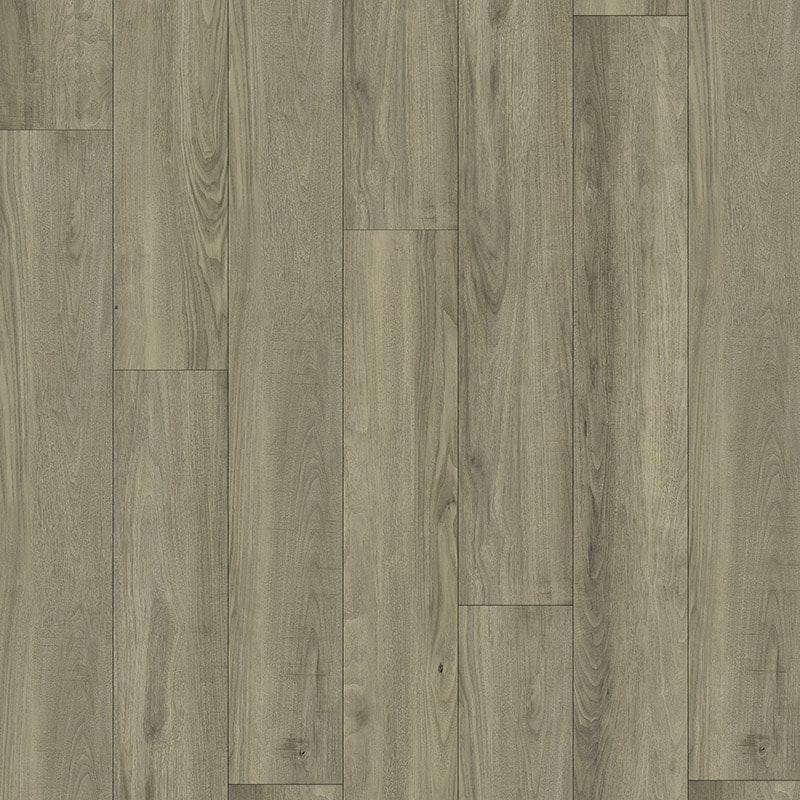
The choice between wood grain PVC film and genuine wood veneer is one of the most common decisions in furniture and interior specification. Both have real strengths, and the right answer depends on the application environment, budget, and aesthetic priorities.
Whether you're sourcing for a manufacturing line or a one-off renovation project, a few practical evaluation steps help you distinguish a quality wood grain PVC film from a cheaper product that will disappoint in service.
Hold the film up to natural light and examine the grain pattern at close range. High-quality wood grain PVC decorative film uses multi-color rotogravure printing with tight register — meaning the grain lines are sharp, the color layers are precisely aligned, and there's no blurring or color fringing at pattern edges. Cheaper films often show visible dot patterns under close inspection, muted color depth, and repeating grain loops that are obvious across a large surface area. Ask for a large sample (at least 300mm × 300mm) rather than a small swatch so you can assess pattern repeat frequency.
Run your finger across the film surface. Quality wood grain PVC film has a synchronized emboss — meaning the raised and recessed texture of the grain lines up precisely with the printed grain pattern beneath. This synchronization is what creates the impression of genuine wood grain depth. Films where the emboss and print are misaligned feel generically textured rather than authentically wood-like. Deeper emboss also improves fingerprint and scuff resistance on high-touch surfaces like cabinet door fronts.
For commercial or export projects, always request documentation rather than taking claims at face value. Key certifications to ask for include REACH compliance (EU chemical safety), RoHS (restriction of hazardous substances), ASTM or EN flammability test reports for fire-rated applications, and formaldehyde emission test results (E0/E1 class) for indoor air quality compliance. Reputable manufacturers supply these as standard; hesitation or vague responses when asked for documentation is a meaningful red flag.
Even the best wood grain PVC film will underperform if the application process isn't handled correctly. Here are the most important practical factors that affect adhesion quality, surface appearance, and long-term durability.



Contact
 China Company Address: No.5 Zhaojia Road,
Vietnam Factory Address: GNP Yen Binh
1 - lndustrial Center (Lot CN13,CN18,Yen
Binh Industrial Park, Ward, Dng Tien, Ph8 Yen,
Thai Nguyen 24000)
Thailand Factory Address: 289/12 Moo 7, Klong Kiu Sub-District, Ban Bueng District, Chonburi 20220 THAILAND
China Company Address: No.5 Zhaojia Road,
Vietnam Factory Address: GNP Yen Binh
1 - lndustrial Center (Lot CN13,CN18,Yen
Binh Industrial Park, Ward, Dng Tien, Ph8 Yen,
Thai Nguyen 24000)
Thailand Factory Address: 289/12 Moo 7, Klong Kiu Sub-District, Ban Bueng District, Chonburi 20220 THAILAND
 Tel: +86-13685281168
+86-13813687178
Tel: +86-13685281168
+86-13813687178
 E-mail: [email protected]




 English
 русский