Content
Hickory PVC film is a specialized surfacing material engineered to replicate the distinct, rugged beauty of natural hickory wood. Unlike softer wood grains, hickory is characterized by its dramatic color contrasts—ranging from creamy whites to deep reddish-browns—and its intricate, often wavy grain patterns. The film is produced using high-quality polyvinyl chloride resins combined with advanced rotogravure printing techniques. This process allows manufacturers to capture the "cathedral" graining and mineral streaks that make authentic hickory so desirable for rustic and transitional interior designs.
Beyond the visual layer, these films typically feature a multi-layered structure. The base layer provides the primary color and opacity, while the printed layer carries the high-definition wood grain pattern. A critical component is the top transparent "wear layer," which is often treated with a UV coating. This protective shield prevents the film from yellowing under sunlight and provides the specific texture—be it a smooth matte, a synchronized deep-pore emboss, or a slight gloss—that mimics the tactile feel of real wood veneer.
When selecting Hickory PVC film for industrial or DIY applications, understanding the technical parameters is essential for ensuring durability and bond strength. These films are designed to be flexible enough for vacuum forming but rigid enough to resist impact and scratching in high-traffic areas like kitchen cabinets or office furniture.
| Property | Standard Range |
| Thickness | 0.12mm to 0.50mm |
| Width | 1250mm to 1420mm |
| Heat Shrinkage | ≤ 4% (at 80°C) |
| Light Fastness | Grade 6 or higher |
This is the most common method for creating 3D surfaces, such as raised-panel cabinet doors. The Hickory PVC film is heated until it becomes pliable, then a vacuum draws the film tightly over an MDF (Medium Density Fiberboard) core coated with adhesive. This ensures that the hickory grain wraps seamlessly around the edges, eliminating the need for edge banding and creating a high-end, solid-wood appearance.
For large flat surfaces like wall panels, partitions, or wardrobe sides, flat lamination is utilized. The film is applied using a series of rollers that exert even pressure across the substrate. This method is highly efficient for mass production and results in a perfectly smooth finish that highlights the linear beauty of the hickory pattern without any bubbling or misalignment.
Profile wrapping is used for intricate shapes such as window frames, door casings, and baseboards. The Hickory PVC film is wrapped around complex contours of aluminum, plastic, or wood-plastic composite (WPC) profiles. This allows for a consistent wood look across all trim and molding elements in a room, ensuring a cohesive design language.
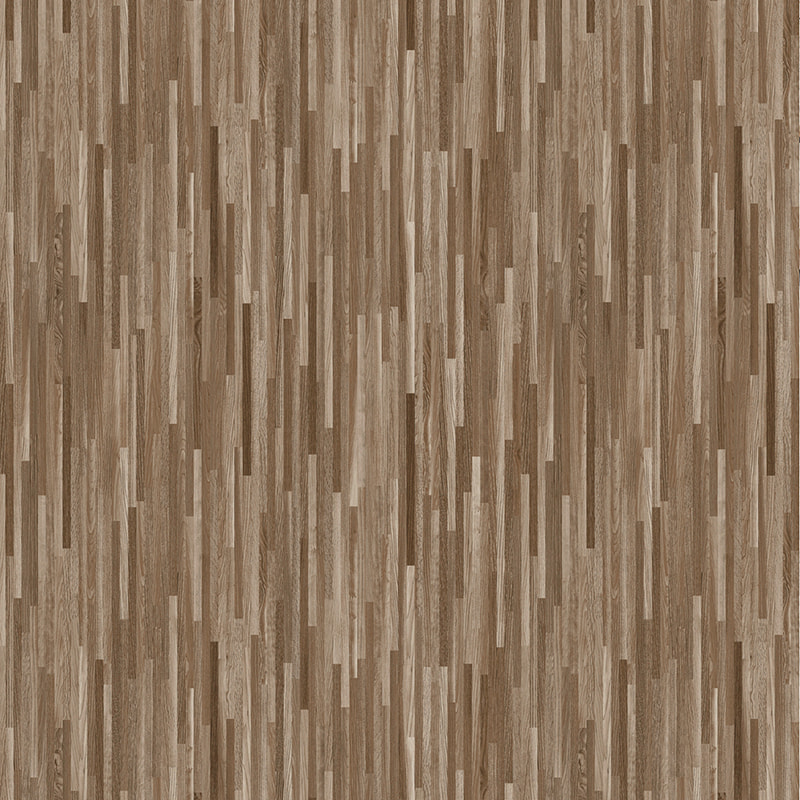
Choosing Hickory PVC film offers several practical benefits that traditional timber products cannot match, particularly regarding maintenance and environmental resistance. While real hickory is prone to warping with moisture changes, PVC film remains dimensionally stable.
Currently, Hickory PVC film is trending in "Modern Rustic" and "Industrial" interior styles. The heavy graining provides a warm, organic counterbalance to cold materials like concrete, glass, and black metal. Designers often use darker hickory films for lower cabinetry to anchor a kitchen, while using lighter, "natural hickory" films for open shelving or wall accents to keep the space feeling airy.
Another emerging trend is the use of "Synchronized Grain" (EIR - Embossed In Register) hickory films. In these premium films, the physical texture of the emboss exactly follows the printed lines of the wood grain. This creates a hyper-realistic finish that is nearly indistinguishable from real wood, providing a luxury feel at a fraction of the cost of solid hickory lumber.



Contact
 China Company Address: No.5 Zhaojia Road,
Vietnam Factory Address: GNP Yen Binh
1 - lndustrial Center (Lot CN13,CN18,Yen
Binh Industrial Park, Ward, Dng Tien, Ph8 Yen,
Thai Nguyen 24000)
Thailand Factory Address: 289/12 Moo 7, Klong Kiu Sub-District, Ban Bueng District, Chonburi 20220 THAILAND
China Company Address: No.5 Zhaojia Road,
Vietnam Factory Address: GNP Yen Binh
1 - lndustrial Center (Lot CN13,CN18,Yen
Binh Industrial Park, Ward, Dng Tien, Ph8 Yen,
Thai Nguyen 24000)
Thailand Factory Address: 289/12 Moo 7, Klong Kiu Sub-District, Ban Bueng District, Chonburi 20220 THAILAND
 Tel: +86-13685281168
+86-13813687178
Tel: +86-13685281168
+86-13813687178
 E-mail: [email protected]




 English
 русский