Pine has a way of making a room feel calmer. Its pale honey tones, soft grain and gentle knots work in kitchens, bedrooms, offices and retail spaces without shouting for attention. For manufacturers and designers, though, solid pine can raise practical questions about cost, consistency, moisture movement and maintenance. That is where pine PVC film earns its place.
Content
Pine PVC film is a decorative surface layer made from polyvinyl chloride and printed or embossed with a pine wood grain. It is not a replacement for structural timber. It is a finish designed to sit on a substrate such as MDF, particleboard, plywood or another compatible panel, giving that surface the look of pine while keeping the panel's own engineering properties.
At our factory, pine designs sit within the wood grain family, alongside oak, hickory and walnut looks. The appeal is straightforward: the film offers the visual warmth of pine with a surface that can be produced in repeatable batches, which matters when a project needs panels, doors and furniture fronts to feel part of the same scheme.
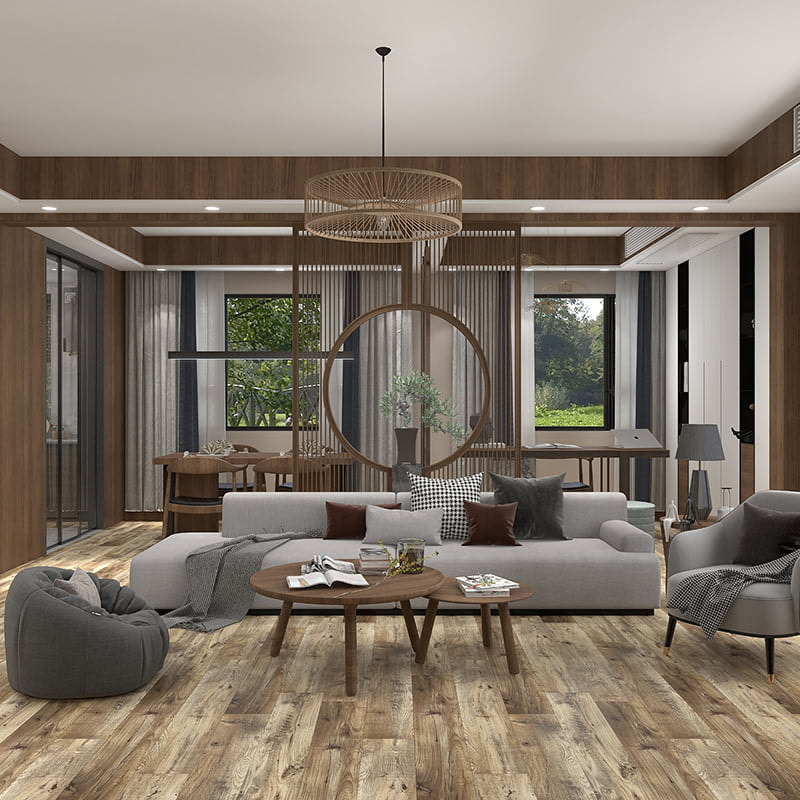 Pine Design Decorative Film Range for Furniture SurfacesPine-look PVC decorative films for furniture and surface decoration, offered in multiple grain models with controlled tone, knot detail and texture.View Product →
Because the grain is produced as a film, the pattern can be controlled more closely than in natural timber. That does not mean every pine film looks the same. Tone, knot detail, grain scale and surface texture all change the final character, from clean Scandinavian pale pine to a warmer, more rustic knotty look.
Pine is associated with relaxed interiors: Scandinavian bedrooms, farmhouse kitchens, light-filled workspaces and simple retail displays. A pine PVC film keeps that association while offering a surface that is generally simpler to clean than unfinished or oiled timber. Everyday marks can usually be wiped away with a soft, damp cloth, provided the film and edge sealing have been specified correctly for the application.
Film also gives designers room to work with tone and grain direction. A pale pine can make a small room feel lighter; a honey pine adds warmth to a reception desk or cabinet front; a knotty pine brings character to a feature wall or display fixture. If you want a broader view of why this look is appearing more often, our industry note on the rising popularity of pine PVC film in modern interiors is a useful starting point.
For manufacturers, the practical benefit is consistency. Once a pine tone and grain direction are approved, the film gives a repeatable reference for future production runs, which is harder to guarantee with natural boards.
It helps to compare the two by project need rather than by "better or worse." Solid pine has a structural role and a natural character that many people love. Pine PVC film plays a different part: it is a decorative finish for panels and surfaces that need a consistent pine look.
| Consideration | Pine PVC film | Solid pine |
|---|---|---|
| Appearance consistency | Repeatable grain and tone across panels | Natural variation from board to board |
| Maintenance | Usually wipe-clean with a soft cloth | Needs sealing and periodic refinishing |
| Moisture movement | Performance depends on substrate and edge sealing | Can swell or move with humidity changes |
| Design range | Many pine tones and grain effects | Limited to the timber supplied |
| Material and finishing cost | Surface layer on a panel, often cost-effective | Higher timber and finishing cost |
| Structural role | Decorative finish, not structural | Can provide structural strength |
The table is a starting point, not a specification. Final performance depends on the film grade, the substrate, the adhesive system, edge sealing and the conditions of use. For wet areas or high-traffic surfaces, ask for current technical data and test a sample before committing to a production run.
Pine PVC film is most at home on interior surfaces where a warm wood look needs to stay practical and consistent.
Wardrobes, drawer fronts, bookcases, TV units, sideboards and storage systems can all use a pine film to create a lighter, more natural feel. It works particularly well when the design calls for matching panels rather than a single statement piece.
Wall panels, ceiling features, door skins and room dividers benefit from the calm rhythm of pine grain. Keep grain direction in mind: vertical grain can make a ceiling or wall feel taller, while horizontal grain can widen a narrow space.
Reception desks, shelving, display fixtures and office storage can use pine film to soften commercial interiors without the maintenance cycle of natural timber. In busy settings, choose a finish and edge treatment that suit the cleaning routine.
Pine is not one colour. The same room can feel very different depending on whether the film leans pale, golden, honeyed or weathered. A simple way to narrow the choice is to decide what role the pine should play.
Grain scale matters as much as colour. A fine, tight grain reads more contemporary, while a pronounced grain with visible knots feels more rural. Always view a sample under the lighting of the final space, and check how the film looks next to adjacent floors, worktops and paint colours.
Our wood grain decorative film collection includes pine alongside other wood looks, so you can compare tones within one family before requesting samples.
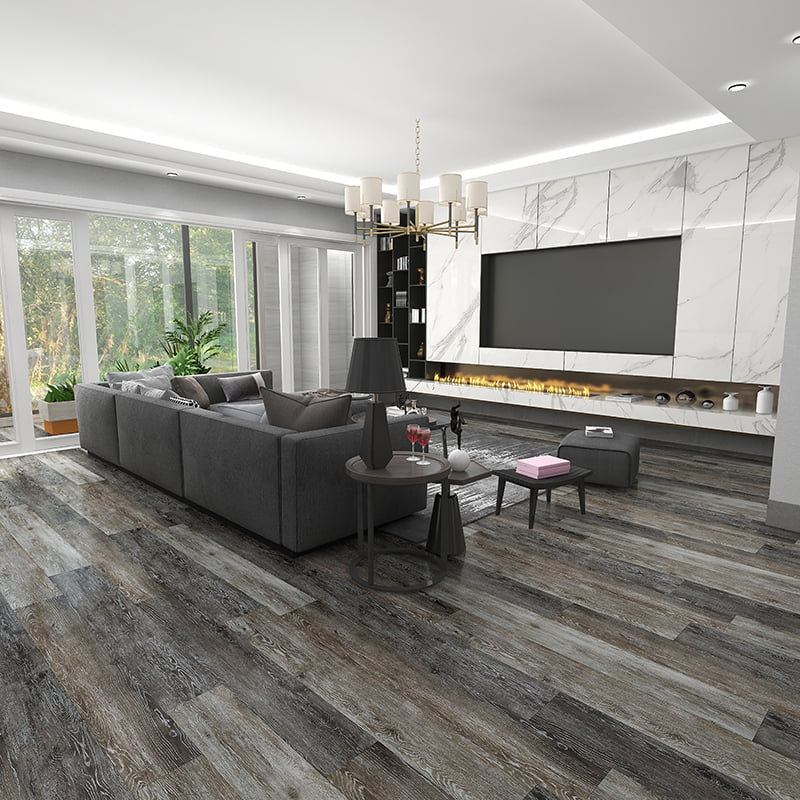 Wood Grain Decorative Film Collection for Indoor SurfacesWholesale PVC wood-grain films in oak, pine and other species for indoor floor and wall decoration, with varied patterns and customization options.View Product →
A good film result is mostly about preparation. The substrate should be clean, dry, flat and suitable for the adhesive or lamination process. Dust, oil, moisture and rough edges are common causes of poor adhesion or visible defects after finishing.
If you are unsure about substrate compatibility or want a sample to test in your own process, contact our team. We would rather answer a technical question early than have a finish fail after lamination.
When comparing suppliers, look beyond the catalogue image. Ask how the film will behave in your process and how consistently it can be repeated.
We are a decorative materials manufacturer based in Changzhou, China, with a factory in Vietnam that began mass production in September 2023. Our wood grain range includes oak, hickory, pine and walnut designs, and we work with customers on special editions when a standard tone is not quite right. That combination of standard range and development support is useful when a project needs a pine look that feels specific rather than generic.
Pine PVC film is at its best when the tone, grain and substrate are chosen together. Start with the feeling you want the space to have, then check the practical details: cleaning routine, edge treatment, lighting and the way the surface will be used. A sample is always worth the extra step.
If you are planning furniture, panels, doors or retail fixtures and want to explore pine tones, send us a message or request a sample. We will help you compare options and choose a finish that fits the way the surface will actually live.



Contact
 China Company Address: No.5 Zhaojia Road,
Vietnam Factory Address: GNP Yen Binh
1 - lndustrial Center (Lot CN13,CN18,Yen
Binh Industrial Park, Ward, Dng Tien, Ph8 Yen,
Thai Nguyen 24000)
Thailand Factory Address: 289/12 Moo 7, Klong Kiu Sub-District, Ban Bueng District, Chonburi 20220 THAILAND
 Tel: +86-13685281168
+86-13813687178
 E-mail: [email protected]




 English
 русский