Pine is one of those woods that quietly does a lot of work in a room. It lightens a dark corner, takes the edge off a very modern kitchen, and gives an ordinary cabinet door something worth looking at. Real pine, though, arrives with its own complications: knots that check, boards that move, and prices that have not been especially gentle lately. Pine PVC decorative film exists to keep the look and drop most of the trouble, and it is the material we spend most of our working days producing.
Content
In plain terms, pine PVC decorative film is a printed, embossed polyvinyl chloride sheet made to be laminated onto another surface: MDF, plywood, particleboard, hollow-core doors, aluminium profiles, and so on. The film supplies the appearance plus a layer of protection; the board underneath supplies the structure. That division of labour is the reason a cabinet built from ordinary board can pass for solid pine from across a room.
Most films in this family are built in layers. There is a base PVC sheet, a printed grain, an embossed texture pressed into the surface, and often a primer on the reverse so adhesives behave predictably. Some are supplied as wrap-grade film for profiles or with a backing for particular laminating lines. When you compare quotes from two suppliers, compare the layer structure as well as the price, because rolls that look identical in a photograph can behave very differently under a hot laminating roller.
One honest note before we go further: film is not wood. It will not take a stain the way a pine board does, it has no grain to sand back, and it will not develop a patina over twenty years. What it will do is hold a consistent colour across thousands of square metres, which is a genuine advantage when a project needs fifty matching doors rather than fifty near-matches.
Pine sits at the pale, warm end of the wood spectrum. Its grain is broad and open rather than fine and linear, and the occasional knot gives a surface some personality without demanding attention. That combination is why pine keeps turning up in Scandinavian and Japandi interiors, in coastal schemes, in children's rooms, and in the kind of kitchen where the cabinetry is meant to feel like furniture rather than a wall of boxes.
There is a practical side too. Light wood tones move daylight around, so a small room with pine fronts reads larger than the same room in walnut. Pale grain is also forgiving: a busy household will notice a scratch on a dark, glossy surface long before it notices one on a matte pine print. And because the print is consistent, a replacement door ordered two years later can still match the original run.
Kitchen doors, wardrobe fronts, bedside tables, open shelving and desk tops are the everyday territory here. Flat lamination suits panels; wrap-grade film handles the rounded profiles and edge returns that give a door its shape. Pine on a handleless kitchen looks calm and slightly rustic; the same film on a shaker door reads traditional. The design of the door does as much work as the grain itself.
Slatted acoustic panels, shiplap-style boards and ceiling battens are lighter and easier to install when they are built from filmed MDF rather than solid timber. The visual warmth stays, the weight drops, and there is no need to worry about a board twisting in a dry winter room.
Cafés, clinics, hotel corridors and retail counters all need repeatable colour across a fit-out that may be fabricated in several workshops. A film reference number solves a problem that a timber order cannot, because every batch of pine boards is slightly different and every film batch can be matched to a retained sample.
Not every pine print is the same pine. Two films can both be labelled "pine" and sit at opposite ends of the palette, so it helps to decide which version of the wood you actually want before you request samples.
| Tone | What it looks like | Works well with |
|---|---|---|
| Pale knotty pine | Light and slightly cool, with visible knots and open grain | White walls, matte black hardware, Scandinavian schemes |
| Golden pine | Warm honey cast, tighter grain, fewer knots | Cream textiles, brass fittings, traditional cabinetry |
| Weathered pine | Grey-brown and muted, as if left outdoors | Stone textures, concrete, coastal and industrial interiors |
| Whitewashed pine | Soft and low-contrast, grain showing through a pale wash | Small rooms, children's furniture, light commercial fit-outs |
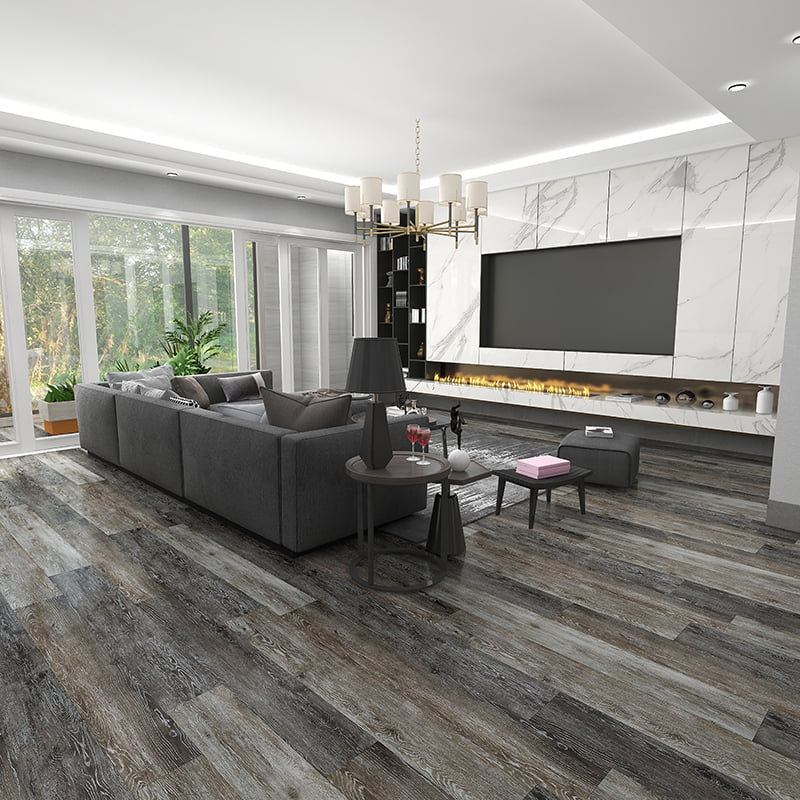 Wood Grain Decorative Film Range with Oak DesignsBrowse PVC wood-grain decorative films across oak, pine, walnut and other species, with multiple oak models and size options for indoor surfaces and furniture.View Product →
Our wood grain range is organised by species, which makes comparison easier: you can put oak, hickory and pine samples side by side on the same bench and see how the warmth shifts.
Choosing a pine design is the pleasant part. Getting a roll that behaves well on your line is the part that decides whether the project runs smoothly. These are the questions we would ask in your position.
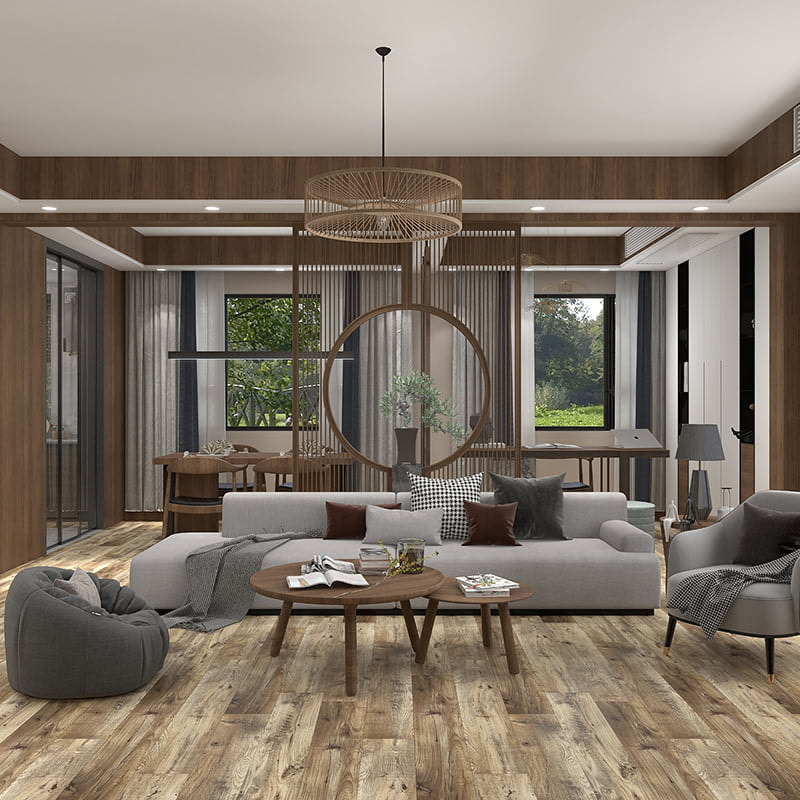 Pine Design Decorative Film CollectionCompare pine-look decorative films by model and roll or sheet size, with softer, lighter grain suited to furniture and surface decoration.View Product →
If you want to compare pine designs directly, the pine design collection is a sensible place to start, and we are happy to send cut samples so you can judge the grain under your own lighting.
Most complaints about decorative film trace back to the surface underneath rather than the film itself. A few habits prevent the majority of them.
None of this is complicated, but all of it is easier to do at the start of a run than to correct at the end of one.
Any printed film will shift slowly under strong, direct sun, which is true of most decorative surfaces. For south-facing windows and conservatory-style spaces, tell your supplier what the exposure will be and ask for the grade suited to it. Interior panels away from direct sun are far less of a concern.
The film surface itself copes with occasional splashes and wipes down easily. The risk is at the edges and joints, where water can reach the board behind. Sealed edges, a moisture-resistant core and sensible ventilation matter more than the grain pattern you choose.
A soft cloth with mild soapy water is enough for daily marks. Avoid scouring pads, solvent-heavy cleaners and anything abrasive, and wipe in the direction of the grain so the emboss keeps its shape.
We are Changzhou Yunchang Decorative Materials, a decorative film manufacturer working from a base in Changzhou, China, with a second plant in Vietnam that has been in production since September 2023. Our range covers wood grain, stone grain and carpet grain designs across more than a thousand patterns, and we also develop new textures with customers who need something that is not on the shelf. You can read more about the team and the way we work on our company profile page.
If you are still weighing up whether film or timber suits your next project, this short piece on why pine film has become so common in modern interiors covers the trade-offs from a designer's point of view.
Pine has stayed popular for a simple reason: it makes a space feel comfortable without asking for much in return. Pine PVC decorative film lets you use that quality at scale, on surfaces that would never justify solid timber, and keep the colour consistent from the first door to the last. If you are planning a run, send us the panel sizes and the look you have in mind, and we will tell you honestly which of our designs will work and which will not.



Contact
 China Company Address: No.5 Zhaojia Road,
Vietnam Factory Address: GNP Yen Binh
1 - lndustrial Center (Lot CN13,CN18,Yen
Binh Industrial Park, Ward, Dng Tien, Ph8 Yen,
Thai Nguyen 24000)
Thailand Factory Address: 289/12 Moo 7, Klong Kiu Sub-District, Ban Bueng District, Chonburi 20220 THAILAND
 Tel: +86-13685281168
+86-13813687178
 E-mail: [email protected]




 English
 русский