Pine decorative film has a quiet kind of appeal. It brings the soft, light character of pine into spaces where solid wood would be costly, heavy, or difficult to maintain. For furniture makers, interior designers, and panel processors, it offers a practical way to add warmth without losing consistency. In our work at Changzhou Yunchang Decorative Materials, we see pine film used in projects that need a natural look and a reliable surface.
Content
Pine decorative film is a PVC-based surface material printed and embossed to resemble pine wood. It is not a veneer or a solid timber board. The film is a decorative layer that is bonded to a substrate such as MDF, particleboard, plywood, or another engineered panel. Depending on the product, the surface may carry fine grain lines, subtle knots, and a matte or lightly textured finish.
The aim is not to imitate every piece of pine perfectly. It is to capture the parts of the look that people respond to: pale honey tones, gentle contrast, and an easygoing grain pattern. Because the film is manufactured in rolls, the color and texture can be kept consistent from one batch to the next, which matters when a project includes many doors, panels, or cabinet fronts.
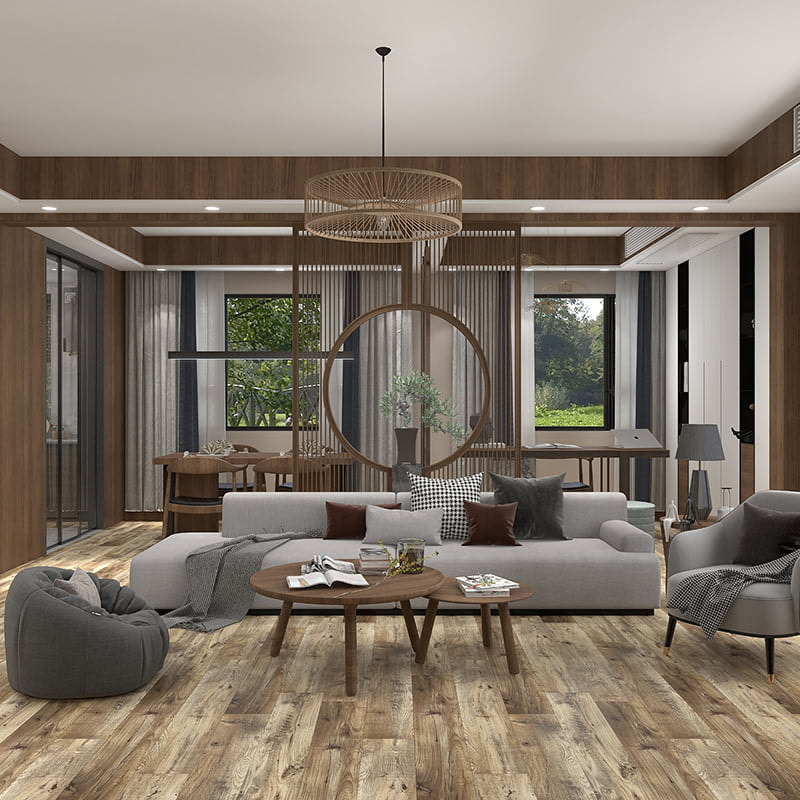 Pine Wood Grain Decorative Film for Interior SurfacesA range of pine-look PVC films for furniture and interior surfaces, offering consistent roll color and texture across doors, panels, and cabinet fronts.View Product →
Pine has a particular place in interior design. It feels familiar without being old-fashioned, and it brings a softness that darker woods sometimes cannot. Several qualities make pine decorative film especially useful.
Pine tends to sit at the lighter end of the wood spectrum. Its pale yellow and honey tones reflect more light than walnut or dark oak, so rooms can feel brighter and more open. That makes pine film a sensible choice for compact kitchens, small bedrooms, and work areas where a heavy wood finish would be too much.
Darker woods can anchor a room, but they can also make a space feel closed in. Pine film gives the eye enough grain and knot detail to read as wood, while keeping the overall effect relaxed. It works well when the goal is a calm, natural interior rather than a formal or dramatic one.
Pine is not limited to one look. A clean, straight grain can suit Scandinavian-inspired furniture and simple wall panels. A design with more visible knots can feel at home in a coastal setting, a modern farmhouse kitchen, or a casual retail space. Because the film is available in different shades and emboss patterns, the same pine theme can move from subtle to rustic.
Pine decorative film is often used on surfaces that need a wood look but not the weight or upkeep of solid pine. Common applications include:
Because the film is flexible, it can be wrapped or laminated onto shaped panels, although the right method depends on the substrate, adhesive, and equipment. It is also a practical option when a project needs repeatable color across many units.
Choosing a pine decorative film is mostly about matching the surface to the room. A sample that looks right in one light may look different in another, so it helps to compare options in the place where they will be used.
A good supplier will send samples and explain the difference between designs. Our wood grain range includes pine alongside oak, hickory, and walnut, so you can compare tones and textures before making a decision.
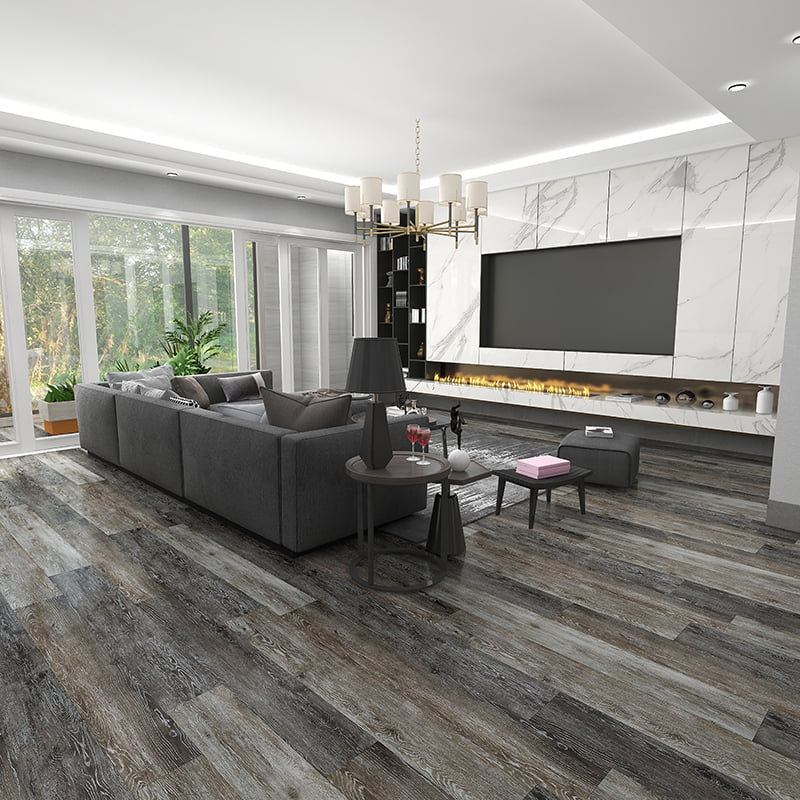 Wood Grain PVC Decorative Film SeriesPVC films with printed wood grains including pine, oak, hickory, and walnut, suitable for indoor wall and floor decoration and sample comparison.View Product →
Pine has a lighter, softer look than many other wood grains. The table below offers a general comparison. Actual color, grain, and texture vary by product, so samples remain the best guide.
| Wood look | Typical character | Common fit | Points to check |
|---|---|---|---|
| Pine | Light honey to pale yellow, soft grain, small knots | Bright interiors, casual furniture, Scandi and coastal schemes | Knot density, sheen, edge match |
| Oak | Clear grain, medium to warm brown, strong character | Kitchens, flooring visuals, statement furniture | Grain scale, color variation |
| Hickory | Contrasting grain, rustic energy, warmer tone | Feature walls, cabinetry with visible pattern | Busy grain in large panels |
| Walnut | Deep brown, rich figure, more formal feel | Premium furniture, dark accents, executive spaces | Lighting, scratch visibility |
Pine film is not simply a cheaper stand-in for oak or walnut. It has its own design role. When the room needs light and a relaxed wood feel, pine can be more appropriate than a darker grain.
Good results depend as much on preparation as on the film itself. The substrate should be clean, flat, and suitable for the chosen adhesive or lamination process. Dust, oil, and moisture can interfere with bonding, so surface preparation deserves time and attention.
For wrapped or laminated panels, the film needs the right temperature, pressure, and handling. Sharp edges and tight curves may require different techniques from flat panels. It is worth testing a small piece before running a full batch, especially when switching substrate or adhesive.
Care is usually straightforward. Use a soft cloth and a mild, non-abrasive cleaner. Avoid scouring pads, strong solvents, and excess water around seams. For furniture and wall panels, a quick wipe is often enough. As with any decorative surface, performance depends on the complete construction, not the film alone.
If you are specifying pine film for a project, ask about the recommended cleaning method and the expected wear conditions. A film used on a low-touch wall panel may not need the same specification as a film used on a busy reception desk.
Pine decorative film is a simple material in concept, but the supply details matter. Color consistency, roll width, surface texture, and delivery timing all affect how smoothly a project runs. At Changzhou Yunchang Decorative Materials, we produce PVC decorative films from our base in Changzhou and from our Vietnam factory, which began production in September 2023. We work with customers who need standard wood grain designs as well as those who want to develop a special version of a texture or color.
If you are comparing pine options, tell us what the surface will be used for, how it will be finished, and what look you have in mind. We can help you narrow the choice and arrange samples. To discuss a project, contact our team. For a broader look at how pine film can be used, read this guide to pine decorative film.
Pine decorative film offers a warm, natural finish without the weight and upkeep of solid pine. It can bring light into a room, soften a hard-edged cabinet, or give a plain panel a more considered look. The key is to choose the right grain, sheen, and edge detail for the setting, then apply it with care. If you are planning a furniture, interior, or panel project, we would be glad to help you find a pine design that fits.



Contact
 China Company Address: No.5 Zhaojia Road,
Vietnam Factory Address: GNP Yen Binh
1 - lndustrial Center (Lot CN13,CN18,Yen
Binh Industrial Park, Ward, Dng Tien, Ph8 Yen,
Thai Nguyen 24000)
Thailand Factory Address: 289/12 Moo 7, Klong Kiu Sub-District, Ban Bueng District, Chonburi 20220 THAILAND
 Tel: +86-13685281168
+86-13813687178
 E-mail: [email protected]




 English
 русский