Walk through almost any furniture showroom and you will meet the same surface again and again: a warm, straight-grained wood look that sits comfortably in a minimalist apartment, a busy family kitchen, and a hotel lobby without ever feeling out of place. Oak has held that position for centuries, and it remains the wood effect we are asked about most often. Oak decorative film is how that look reaches most everyday surfaces today, a printed and embossed PVC sheet that copies oak grain closely enough that most people want to touch the surface before they are sure.
This guide covers what the material actually is, where it tends to work best, how to pick a design that will still look right five years from now, and what is worth checking before you place an order.
Content
An oak decorative film is a thin PVC sheet carrying two things at once: a printed oak pattern and an embossed texture that matches it. The print supplies the color, whether that is the pale straw of European oak, the honeyed amber of American white oak, or the deep brown of smoked and fumed oak. The emboss gives the surface its grain depth, its fine pores, and the soft cathedrals that run through a quarter-sawn board.
The film arrives in rolls and is bonded to a substrate during manufacturing rather than on site. Common substrates include MDF, particleboard, plywood, PVC profiles, and aluminium panels. Once bonded, the film is the visible surface, which is why the print and the emboss have to stay in register. When they drift apart by even a fraction of a millimeter, the grain starts to look printed rather than grown, and that is one of the quickest ways to spot a low-grade product.
Oak is rarely the loudest element in a room, and that is exactly its strength. It reads as natural without tipping into rustic, it holds up against cool greys and warm terracottas alike, and it ages gracefully in a way that trend-driven finishes usually do not. Designers keep returning to it because it gives them a neutral base that still carries texture and life.
There is a practical side too. A film-based oak look stays consistent from panel to panel and from order to order. You are not sorting through boards hunting for a matching grain, or explaining to a client why one cabinet door came out darker than the next. On a project that needs several hundred identical surfaces, that predictability matters as much as the appearance.
Oak also sits inside a wider family of wood-look films. If you would like to see how it compares with the alternatives before narrowing anything down, the full wood grain range covers oak, hickory, pine, and walnut designs side by side.
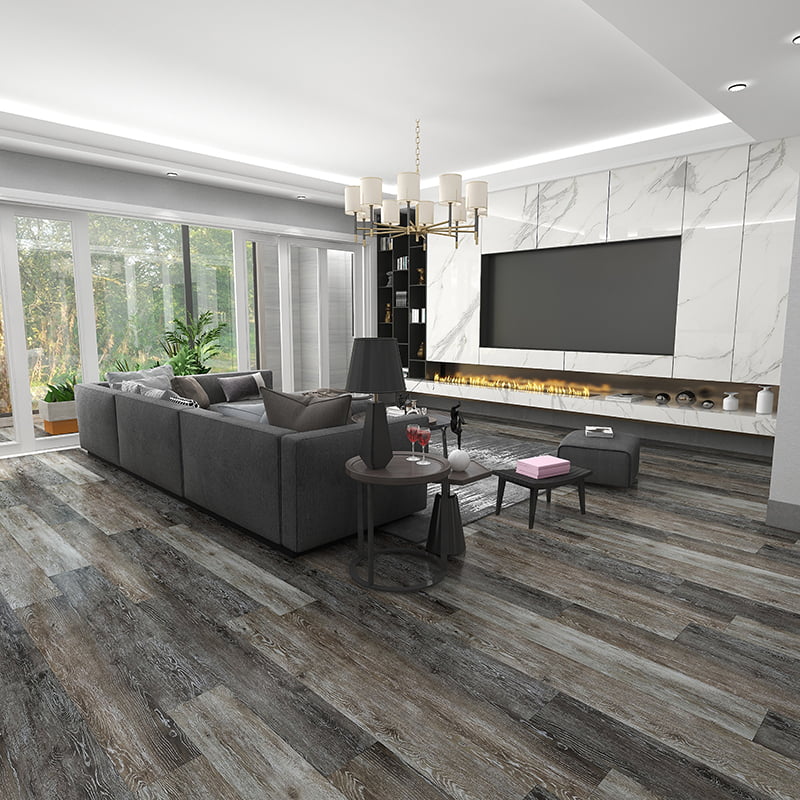 Wood Grain PVC Decorative Film RangeCompare PVC wood-grain films in oak, hickory, pine and walnut designs for interior decoration, furniture and wholesale projects.View Product →
Because the film is bonded during production, it fits wherever a flat or lightly profiled panel needs a finished wood face. In practice, that covers a broad spread of interior work:
The common thread is appearance. Oak decorative film changes how a surface looks and feels; what it can carry, span, or tolerate is decided by the board or profile underneath it. That is a useful way to think about it when you are specifying, because it keeps the conversation focused on the right decisions.
Grain scale should match the size of the surface. A large wardrobe run or a full wall panel usually takes a calmer, wider grain, because a busy small-scale pattern repeated across two meters starts to look restless. Small drawer fronts and narrow trims are the opposite case: they can carry a finer, tighter grain that would disappear on a big panel.
Tone does more work in a room than texture does. Pale oak lifts small or north-facing spaces and pairs easily with white and soft green. Golden oak is the dependable middle ground for kitchens and general furniture. Dark or smoked oak brings weight and drama, but it also shows dust and fingerprints more readily. Decide the tone first, then find the grain that suits it.
Two films can print identically and still feel completely different, depending on whether the surface is matte, satin, or high gloss, and whether the emboss is deep or shallow. Matte surfaces hide everyday marks and read as more natural. Gloss picks up light beautifully in a display context but demands more cleaning discipline in a family kitchen.
Photographs lie, and screens vary. A swatch in the actual room, under the actual lighting, is the only reliable test. Take a sample large enough to see several repeats of the pattern, and view it standing up rather than flat on a table.
| Oak Tone | Best Suited To | Keep in Mind |
|---|---|---|
| Pale or whitewashed oak | Small rooms, Scandinavian and coastal schemes, light cabinetry | Can look flat under warm yellow lighting, so test it in place |
| Golden or honey oak | Kitchens, wardrobes, general furniture, long panel runs | The safest all-round choice, but also the most common one |
| Smoked or dark oak | Feature walls, statement joinery, hospitality interiors | Shows dust and fingerprints more readily; matte finishes help |
If you already know the tone you want and simply need to narrow down the pattern, our dedicated oak design page is the quickest place to start.
Oak Design Decorative Film for Furniture and InteriorsExplore oak-grain PVC decorative films with clear, balanced patterns and multiple model and size options for furniture and interior use.View Product →Oak rarely appears alone in a finished interior. The most reliable pairing is oak with walnut: the lighter grain carries the volume of the space while the darker tone anchors it, and the two share a similar straight-grained character so the combination never feels accidental. Hickory works well when you want more movement and contrast within a single palette, and pine suits lighter, softer schemes where oak might read as too formal.
If a project calls for that deeper contrast, it is worth looking at the walnut designs as a companion to your oak selection.
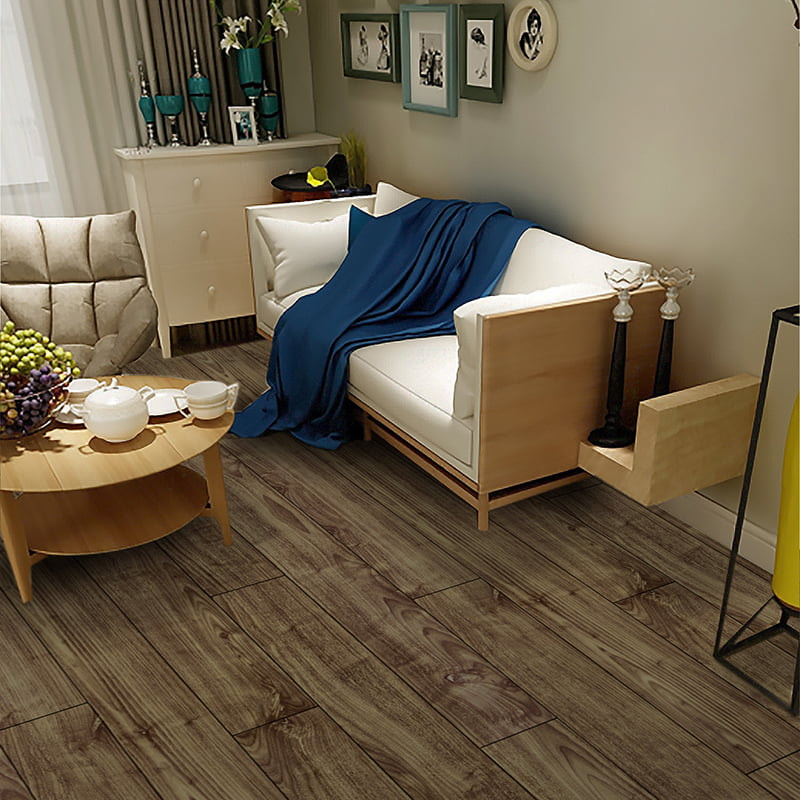 Walnut Design Decorative Film for Furniture and InteriorsExplore deeper walnut-grain PVC films as a companion to oak, with varied models for furniture, cabinetry, wall panels and flooring.View Product →
Most problems with decorative film trace back to preparation rather than the film itself. A short checklist covers the essentials:
Handled this way, an oak decorative film surface stays easy to live with. It does not need oiling, sanding, or refinishing, which is a large part of why it holds up in busy commercial interiors as well as homes.
We are Changzhou Yunchang Decorative Materials Co., Ltd., a manufacturer of PVC decorative films based in Changzhou, China, with an additional production site in Vietnam that was built in July 2023 and moved into mass production that September. Our range is organized into three grain families, wood, stone, and carpet, covering more than a thousand designs in total, with oak sitting at the heart of the wood family.
Standard designs are only part of what we do. If a client needs a specific oak tone, a particular grain scale, or a pattern that does not exist yet, we develop and produce it together with them as a special edition. Samples, color matching, and technical questions are all part of that conversation, and we are happy to host customers at the factory to see the equipment and the quality control process firsthand.
You can read more about how we work and what we hold ourselves to on our company profile page.
Oak has survived every style cycle of the last few centuries because it does not fight with anything else in a room. A well-made oak decorative film does the same job on a panel, a door, or a cabinet front, at a fraction of the cost and with far less maintenance than solid timber.
If you would like to see how the material behaves in real interiors, including how it reads across a full kitchen run, our article on oak decorative film as a stylish and practical wood look goes into more detail. And when you are ready to talk about tones, quantities, or a pattern of your own, send us a message or come and visit the line.



Contact
 China Company Address: No.5 Zhaojia Road,
Vietnam Factory Address: GNP Yen Binh
1 - lndustrial Center (Lot CN13,CN18,Yen
Binh Industrial Park, Ward, Dng Tien, Ph8 Yen,
Thai Nguyen 24000)
Thailand Factory Address: 289/12 Moo 7, Klong Kiu Sub-District, Ban Bueng District, Chonburi 20220 THAILAND
China Company Address: No.5 Zhaojia Road,
Vietnam Factory Address: GNP Yen Binh
1 - lndustrial Center (Lot CN13,CN18,Yen
Binh Industrial Park, Ward, Dng Tien, Ph8 Yen,
Thai Nguyen 24000)
Thailand Factory Address: 289/12 Moo 7, Klong Kiu Sub-District, Ban Bueng District, Chonburi 20220 THAILAND
 Tel: +86-13685281168
+86-13813687178
Tel: +86-13685281168
+86-13813687178
 E-mail: [email protected]




 English
 русский